
Selecting the appropriate stacking rack for your products is a critical decision that directly impacts warehouse efficiency, inventory management, and operational costs. The right stacking rack system can maximize storage density while ensuring product safety and accessibility. This comprehensive guide will walk you through the essential factors, considerations, and decision criteria needed to make an informed choice that aligns with your specific operational requirements and product characteristics.
Understanding your product specifications, warehouse constraints, and operational workflow is fundamental to choosing an effective stacking rack solution. Different industries and product types require distinct approaches to vertical storage, and making the wrong choice can lead to damaged inventory, inefficient space utilization, and increased handling costs. By evaluating key performance indicators and matching them to available stacking rack configurations, businesses can optimize their storage systems for both current needs and future growth.
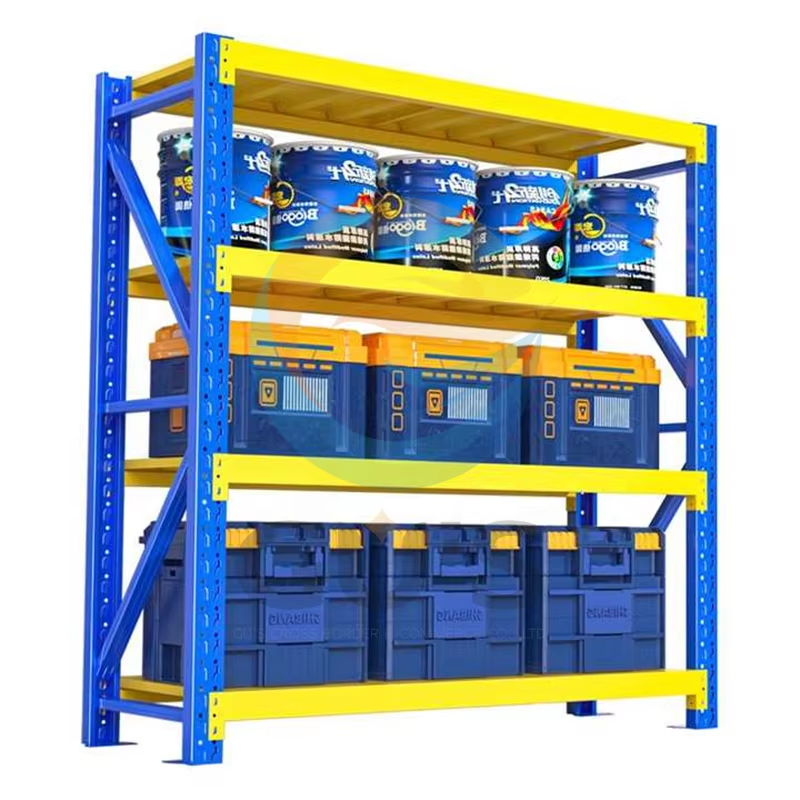
The foundation of choosing the right stacking rack begins with a thorough analysis of your product characteristics. Weight distribution is perhaps the most critical factor, as each stacking rack system has specific load-bearing capacities per tier and overall structural limits. Products with irregular shapes or varying densities require special consideration to ensure stable stacking and prevent structural failure. When evaluating weight requirements, consider both the individual product weight and the cumulative load when multiple units are stored together.
Dimensional constraints play an equally important role in stacking rack selection. Products that extend beyond standard pallet dimensions may require custom rack configurations or specialized support systems. Consider not only the length, width, and height of your products but also any protruding elements, packaging variations, or handling requirements that might affect how items can be safely stacked. The goal is to maximize storage density while maintaining safe clearances for material handling equipment.
Product fragility directly influences the type of stacking rack system that will provide adequate protection during storage and handling operations. Delicate items may require additional cushioning, specialized rack surfaces, or reduced stacking heights to prevent damage. Conversely, robust products might allow for higher stacking densities and more aggressive space utilization strategies. The stacking rack design should complement the inherent stability characteristics of your products.
Stability considerations extend beyond individual product characteristics to include how products interact when stacked together. Some items naturally nest or interlock, providing additional stability, while others may require intermediate supports or special rack features to maintain alignment. Understanding these interactions helps determine whether a basic stacking rack design will suffice or if enhanced stability features are necessary for safe operations.
Warehouse layout and available space directly influence stacking rack selection and configuration options. Floor space limitations may necessitate higher-capacity vertical storage solutions, while height restrictions might require more horizontal expansion strategies. The chosen stacking rack system must fit within existing facility constraints while providing adequate clearance for material handling equipment and personnel access.
Ceiling height, structural obstacles, and building codes all impact the maximum practical height for stacking rack installations. Consider overhead clearances needed for forklifts, crane operations, or automated handling systems. Additionally, evaluate how the stacking rack system will integrate with existing warehouse infrastructure, including lighting, sprinkler systems, and ventilation requirements that might affect placement and configuration options.
The compatibility between your stacking rack system and existing material handling equipment is crucial for operational efficiency. Different rack designs accommodate various forklift types, pallet jacks, and automated systems with varying degrees of effectiveness. Standard stacking rack configurations work well with conventional forklifts, while specialized applications might require custom rack features or modified handling procedures.
Consider the operational workflow and how stacking rack placement affects material flow through your facility. The rack system should enhance rather than hinder picking operations, inventory rotation, and shipping processes. Evaluate whether your current equipment can safely access all rack positions or if additional equipment investments might be necessary to fully utilize the chosen stacking rack configuration.
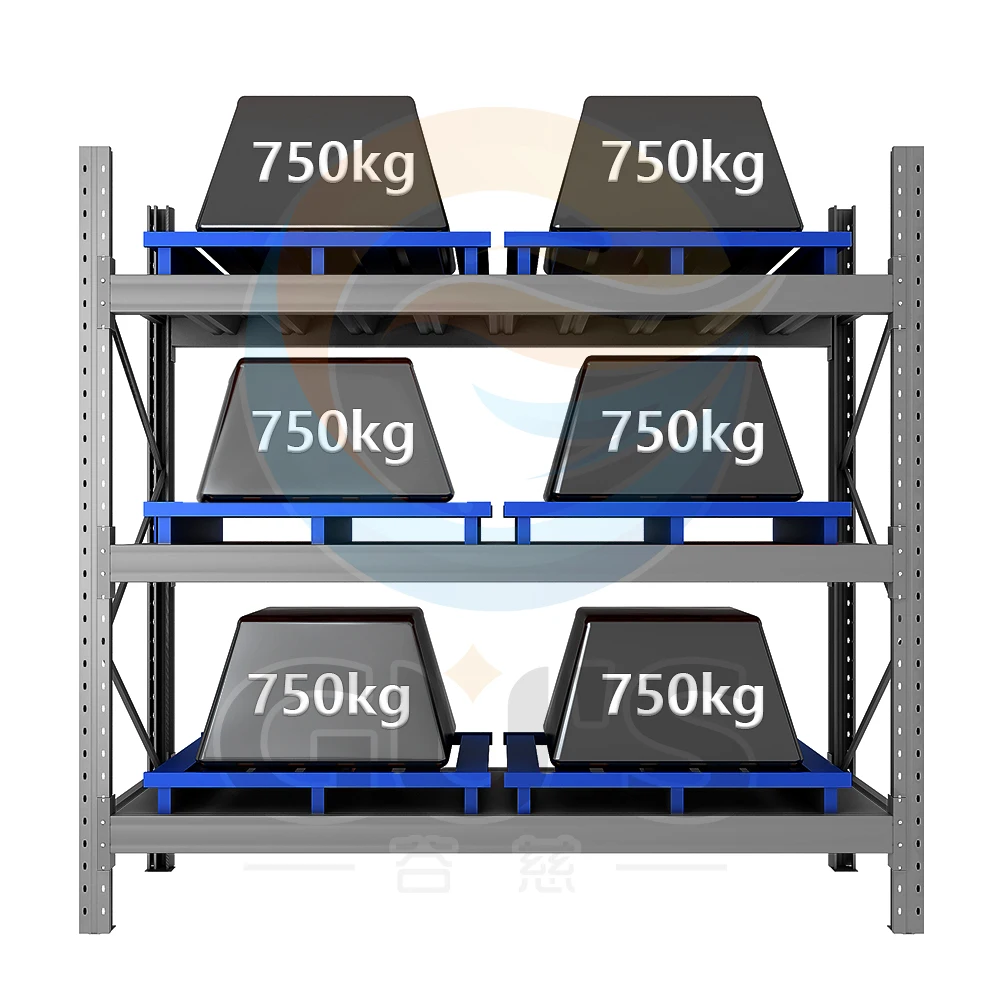
Accurate load calculation forms the basis for safe stacking rack selection and ensures long-term structural integrity. Begin by determining the maximum weight per storage position, including both product weight and any packaging materials. Factor in potential load variations due to seasonal inventory changes, product mix modifications, or future expansion plans. The stacking rack system must accommodate peak loading scenarios while maintaining appropriate safety margins.
Dynamic loading considerations are equally important, as the stacking rack must withstand forces generated during loading and unloading operations. Impact loads from forklift operations, vibrations from facility equipment, and potential seismic activity all contribute to the total stress on the rack structure. Professional engineering analysis may be required for high-capacity applications or facilities in seismically active regions.
Industry standards and regulatory requirements establish minimum safety factors for commercial stacking rack installations. These safety factors account for material variations, manufacturing tolerances, and unforeseen loading conditions that might occur during normal operations. Choosing a stacking rack with appropriate safety margins protects both personnel and inventory while ensuring compliance with applicable building codes and insurance requirements.
Regular inspection and maintenance requirements vary depending on the stacking rack design and intended application. Some systems require periodic structural assessments, while others may need routine component replacements or adjustments. Understanding these ongoing requirements helps evaluate the total cost of ownership and ensures continued safe operation throughout the rack's service life.
Fixed stacking rack systems offer maximum stability and cost-effectiveness for applications with consistent product dimensions and loading patterns. These systems work well when product specifications are unlikely to change and when standardization provides operational advantages. Fixed configurations typically offer higher load capacities and require less maintenance than adjustable alternatives, making them suitable for high-volume, repetitive storage applications.
Adjustable stacking rack systems provide flexibility to accommodate varying product sizes and changing operational requirements. The ability to modify shelf heights, add or remove tiers, or reconfigure the system layout offers significant advantages for facilities that handle diverse product lines or anticipate future changes. However, this flexibility often comes with higher initial costs and may involve some compromise in maximum load capacity compared to fixed alternatives.
Modern stacking rack systems offer various specialized features that can enhance functionality for specific applications. Wire decking, solid shelving, and specialized surface treatments each provide distinct advantages depending on product characteristics and handling requirements. Safety features such as backstops, side guards, and load indicators help prevent accidents and ensure proper system utilization.
Accessibility features including step platforms, integrated ladders, and ergonomic design elements can improve picking efficiency and reduce worker fatigue. For facilities handling temperature-sensitive products, specialized coatings and materials may be necessary to withstand extreme environmental conditions. The key is selecting features that provide genuine operational value without unnecessarily increasing system complexity or cost.
The initial cost of a stacking rack system represents only one component of the total economic impact on warehouse operations. Higher-quality systems may require larger upfront investments but often provide superior durability, lower maintenance costs, and better long-term performance. Consider the expected service life of the system and how it aligns with your facility's operational timeline and potential future changes.
Labor efficiency gains from properly selected stacking rack systems can provide significant ongoing cost savings. Reduced handling time, improved inventory accuracy, and decreased product damage all contribute to operational cost reductions that may justify higher initial system costs. Quantifying these benefits requires careful analysis of current operations and realistic projections of improvement potential.
Choose stacking rack systems that can accommodate future growth and changing operational requirements without requiring complete replacement. Modular designs that allow for incremental expansion or reconfiguration provide flexibility for evolving business needs. Consider how potential changes in product mix, volume, or facility layout might affect the continued suitability of your chosen stacking rack solution.
Integration capabilities with future automation systems or advanced inventory management technologies should factor into the selection decision. While current operations might not require sophisticated features, choosing systems that can accommodate future technological upgrades protects your investment and provides a pathway for operational advancement as business requirements evolve.
The most critical factor is matching the rack's load capacity to your product weight and distribution requirements while considering product fragility and handling characteristics. Products with irregular shapes or varying weights need specialized rack features, while standard products may work well with conventional stacking rack designs. Always include safety factors and consider dynamic loading from handling equipment.
Evaluate your equipment's lifting capacity, reach capabilities, and operational clearance requirements against the proposed stacking rack dimensions and access requirements. Consider fork length, lift height, and turning radius limitations. Most standard stacking rack systems accommodate conventional forklifts, but specialized applications may require equipment modifications or alternative handling strategies.
Prioritize proper load capacity calculations with appropriate safety factors, ensure compliance with local building codes and industry standards, and consider seismic requirements if applicable. Include safety features like backstops and load indicators, plan for adequate aisle spacing and emergency access, and establish regular inspection and maintenance procedures to maintain safe operation throughout the system's service life.
Calculate total cost of ownership including initial purchase price, installation costs, ongoing maintenance requirements, and expected service life. Factor in operational benefits such as improved storage density, reduced labor costs, and decreased product damage. Consider scalability and future expansion capabilities to avoid premature obsolescence. Compare these comprehensive costs across different stacking rack options to identify the most cost-effective solution for your specific application.

Be the first to get our latest styles and offers.
No.11 plant of Jiawei Enterprise,Longyou Industrial Park,Longyou County,Quzhou City,Zhejiang Province Post code: 324407
Copyright © 2026 Guci Cross Border E-Commerce (Quzhou City) Co., Ltd. All rights reserved. - Privacy Policy
 EN
EN
 Hot News