
When warehouse space comes at a premium and storage capacity requirements continue to grow, selecting the optimal pallet rack system for high-density storage becomes a critical business decision. The right choice can dramatically increase storage capacity while maintaining operational efficiency, but the wrong selection can lead to bottlenecks, safety issues, and wasted space that ultimately impact your bottom line.
Several pallet rack configurations excel in high-density storage applications, each offering unique advantages depending on your specific operational requirements, inventory characteristics, and facility constraints. Understanding the key factors that determine which system performs best in your environment requires careful evaluation of storage density potential, access requirements, inventory turnover patterns, and integration with existing warehouse management systems.
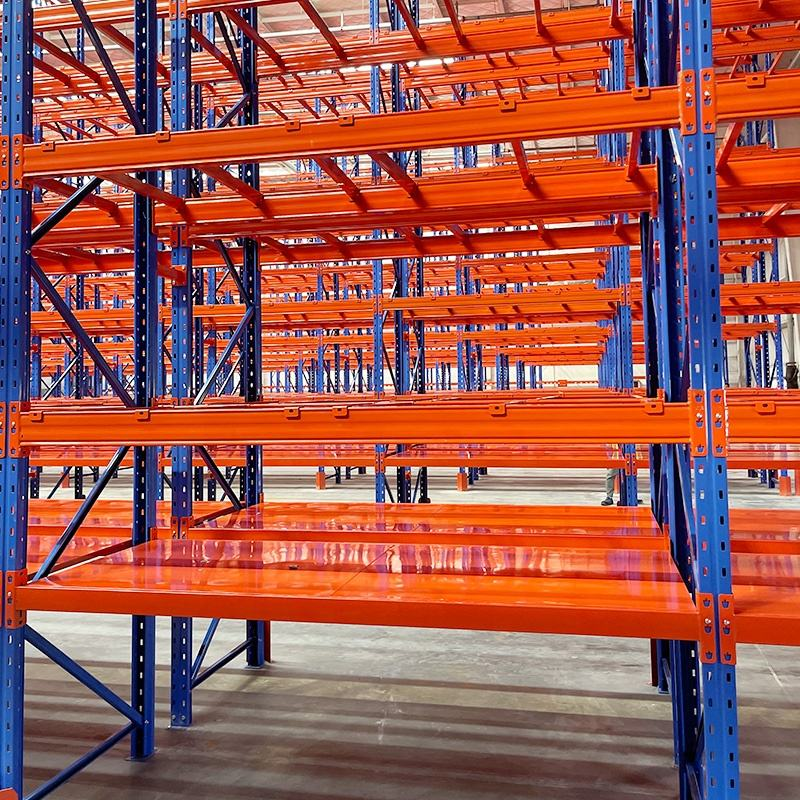
Drive-in rack systems represent one of the most space-efficient solutions for high-density storage applications, particularly when handling large quantities of the same SKU. These systems eliminate aisles between rack bays, allowing forklifts to drive directly into the storage lanes and stack pallets up to six deep in most configurations. The single entry and exit point creates a last-in, first-out inventory flow that works exceptionally well for products with longer shelf lives or seasonal inventory patterns.
The structural design of drive-in racks maximizes cube utilization by reducing the number of required aisles from traditional selective rack layouts. This configuration can increase storage density by 60-75% compared to conventional selective pallet racking, making it an ideal choice for high-density storage requirements in facilities with limited square footage. The system works particularly well for cold storage facilities, where maximizing storage within temperature-controlled environments provides significant operational cost savings.
Drive-through rack systems offer enhanced flexibility for high-density storage applications by providing access points from both ends of the storage lane. This dual-access design enables first-in, first-out inventory rotation, making it suitable for perishable goods or products with strict rotation requirements. The system maintains the space efficiency benefits of drive-in configurations while offering improved inventory control and reduced product obsolescence risks.
The enhanced accessibility of drive-through systems also improves operational efficiency in high-density storage environments by reducing travel distances and enabling better traffic flow patterns. Multiple forklifts can operate simultaneously from different access points, increasing throughput during peak loading and unloading periods. This configuration proves particularly valuable in distribution centers handling fast-moving consumer goods where high-density storage must be balanced with rapid inventory turnover requirements.
Push-back rack systems provide an excellent compromise between storage density and product accessibility for high-density storage applications requiring multiple SKU storage within the same bay. These systems utilize gravity-fed cart mechanisms that allow pallets to be stored two to six deep while maintaining last-in, first-out inventory flow. The dynamic nature of push-back systems enables efficient use of available height and depth while providing better SKU variety than drive-in configurations.
The cart-based design eliminates the need for forklifts to enter storage lanes, reducing potential product damage and improving safety in high-density storage environments. Each storage lane operates independently, allowing different SKUs to be stored at varying depths based on inventory requirements. This flexibility makes push-back systems particularly effective for high-density storage applications in manufacturing facilities or distribution centers handling diverse product lines with varying inventory velocities.
Push-back rack systems incorporate several design features that enhance inventory management capabilities in high-density storage applications. The gravity-fed operation ensures automatic pallet advancement as front pallets are removed, maintaining product presentation and reducing labor requirements for inventory rotation. Visual indicators can be integrated to show lane occupancy levels and facilitate inventory counting without requiring lift truck access.
Safety considerations in high-density storage environments are well-addressed through push-back rack design elements including controlled pallet flow speeds, positive pallet positioning, and reduced forklift travel within storage areas. The system's structural integrity supports heavy loads while the cart mechanisms distribute weight evenly across support rails. These features combine to create a robust solution for high-density storage applications requiring both space efficiency and operational reliability.
Pallet flow rack systems excel in high-density storage applications where inventory rotation and picking efficiency are critical operational requirements. These systems utilize gravity-fed roller tracks or wheel conveyor systems to automatically advance pallets from the loading end to the picking face, ensuring consistent first-in, first-out inventory rotation. The design enables storage depths of up to 20 pallets while maintaining easy access to all SKUs from dedicated picking aisles.
The automatic pallet advancement feature of flow rack systems eliminates the need for forklifts to enter storage lanes, significantly improving safety and reducing product damage risks in high-density storage environments. The separation of loading and picking functions allows simultaneous replenishment and order fulfillment activities, maximizing operational efficiency during peak periods. This configuration proves particularly effective for high-density storage in food and beverage distribution, pharmaceutical warehouses, and e-commerce fulfillment centers.
Modern pallet flow rack systems designed for high-density storage applications can be integrated with warehouse management systems and automated material handling equipment to optimize inventory control and throughput. Sensors and monitoring systems can track pallet movement, inventory levels, and product rotation compliance, providing real-time data for inventory planning and replenishment decisions. This integration capability makes flow rack systems particularly valuable for high-density storage in facilities requiring precise inventory tracking and automated operations.
The scalability of pallet flow rack systems allows for phased implementation in high-density storage facilities, starting with high-velocity SKUs and expanding coverage as operational benefits are realized. The modular design accommodates varying pallet sizes and weights while maintaining system integrity and performance. Advanced configurations can incorporate speed controllers, braking systems, and lane monitoring equipment to optimize product flow and minimize handling damage in high-density storage applications.
Mobile rack systems represent the pinnacle of high-density storage efficiency by eliminating fixed aisles and creating access passages only when needed. These systems mount traditional pallet racks on wheeled bases that move along floor-mounted tracks, allowing multiple rack sections to be compressed together with just one access aisle open at any time. This configuration can achieve storage density increases of 90% or more compared to conventional selective racking systems.
The mechanical or electrical drive systems that power mobile rack movement ensure smooth operation even when fully loaded with product. Safety systems including pressure-sensitive edges, audio-visual warnings, and positive locking mechanisms protect personnel and equipment during rack movement operations. The technology proves particularly effective for high-density storage in archives, cold storage facilities, and specialized storage applications where space costs are extremely high relative to access frequency requirements.
Advanced control systems for mobile rack installations in high-density storage facilities incorporate multiple safety features and operational controls to ensure reliable performance. Push-button controls, radio frequency systems, and integrated warehouse management system interfaces provide flexible operation modes while maintaining strict safety protocols. Emergency stop systems, obstacle detection sensors, and automatic locking mechanisms protect against operational hazards.
The operational efficiency of mobile rack systems in high-density storage applications depends heavily on proper planning and staff training. Inventory placement strategies must consider access frequency patterns to minimize rack movement requirements during normal operations. When properly implemented, mobile rack systems provide unmatched storage density while maintaining reasonable access times for most inventory management tasks in high-density storage environments.
The selection of the optimal pallet rack system for high-density storage applications requires careful analysis of inventory characteristics including SKU variety, lot sizes, turnover rates, and physical product attributes. Products with low SKU counts and large lot sizes favor drive-in or drive-through configurations, while diverse product lines with varying velocities benefit from push-back or flow rack systems. Inventory rotation requirements significantly impact system selection, with FIFO requirements favoring flow rack or drive-through configurations.
Access frequency patterns play a crucial role in determining which high-density storage system will provide optimal performance in your specific application. High-frequency access requirements may favor push-back or selective systems despite lower storage density, while seasonal or slow-moving inventory can effectively utilize maximum density drive-in configurations. The balance between storage density and operational efficiency must be evaluated based on actual picking and replenishment patterns rather than theoretical maximum capacity.
Physical facility characteristics including ceiling height, floor capacity, column spacing, and door locations significantly influence the selection of high-density storage systems. Maximum storage efficiency requires optimization of vertical space utilization while maintaining safe working clearances and compliance with building codes. Floor loading capacity must be evaluated for concentrated loads created by high-density storage systems, particularly for mobile rack installations.
Integration with existing material handling equipment and warehouse management systems affects both initial implementation costs and long-term operational efficiency in high-density storage applications. Forklift specifications must match system requirements for lift height, load capacity, and aisle width clearances. Warehouse management system capabilities for inventory tracking, location management, and operational control should align with the selected high-density storage system's operational characteristics and monitoring capabilities.
High-density storage rack systems typically provide storage density increases ranging from 60% to 90% compared to conventional selective pallet racking, depending on the specific system chosen and facility characteristics. Drive-in and drive-through systems generally achieve 60-75% density improvements, push-back systems provide 50-85% increases, and mobile rack systems can achieve up to 90% density improvements in optimal conditions.
For products requiring strict first-in, first-out inventory rotation, pallet flow rack systems and drive-through rack configurations provide the best high-density storage solutions. Flow rack systems automatically advance pallets and ensure proper rotation, while drive-through systems allow access from both ends to maintain FIFO compliance while maximizing storage density.
High-density storage systems may require specific forklift capabilities including increased lift heights, specialized attachments, or particular truck types for optimal operation. While some systems reduce the number of forklifts needed due to improved space utilization, others may require specialized equipment. Overall operational costs typically decrease due to improved space efficiency, reduced facility costs, and optimized inventory management capabilities.
Modern high-density storage systems can be effectively integrated with automated material handling equipment, warehouse management systems, and monitoring technologies. Flow rack systems particularly excel in automated environments, while push-back and mobile rack systems can incorporate sensors, control systems, and data collection capabilities to support automated warehouse operations and real-time inventory tracking requirements.

Be the first to get our latest styles and offers.
No.11 plant of Jiawei Enterprise,Longyou Industrial Park,Longyou County,Quzhou City,Zhejiang Province Post code: 324407
Copyright © 2026 Guci Cross Border E-Commerce (Quzhou City) Co., Ltd. All rights reserved. - Privacy Policy
 EN
EN
 Hot News